
Sensitive Skin Sunscreen Comparison: EltaMD UV Clear vs La Roche-Posay vs Prequel
Sensitive skin makes sunscreen shopping harder than it should be. A formula can have the right SPF number and still feel too heavy, look too chalky, sting around the eyes, or clash with a barrier-repair routine. That is why this sensitive skin sunscreen comparison focuses less on generic SPF advice and more on practical trade-offs: filter type, finish, irritation risk, price, and who should actually consider each product.
This article compares three daily face sunscreens with strong commercial intent and source-backed product pages: EltaMD UV Clear Broad-Spectrum SPF 46, La Roche-Posay Anthelios Mineral Tinted Sunscreen for Face SPF 50, and Prequel Sun Barrier Mineral Sunscreen SPF 50. The short version: EltaMD is the most acne-prone-routine oriented, La Roche-Posay is the tint-focused mineral option, and Prequel is the barrier-care value pick based on checked official pricing.
Disclosure: Adpard may earn a commission if you buy through some product links. Our editorial notes are based on official product information and cited sources, not paid placement. Read more about our process on our editorial policy and our about page.
Sensitive Skin Sunscreen Comparison at a Glance
| Product | Checked price | SPF and filter notes | Texture angle | Better fit for | Main trade-off |
|---|---|---|---|---|---|
| EltaMD UV Clear Broad-Spectrum SPF 46 | $45 for 1.7 oz | SPF 46; zinc oxide 9.0% plus octinoxate 7.5% | Lightweight daily lotion | Acne-prone, oily, combination, redness-prone routines | Not a mineral-only formula |
| La Roche-Posay Anthelios Mineral Tinted Sunscreen SPF 50 | $39.99 | Tinted shade uses titanium dioxide 11%; other shades list titanium dioxide plus zinc oxide | Tinted mineral fluid | People who want tint and less obvious white cast | Shade match can be personal |
| Prequel Sun Barrier Mineral Sunscreen SPF 50 | $22 for 1.7 fl oz | Zinc oxide 18.0% with chemical boosters listed in inactive ingredients | Semi-transparent peachy finish | Barrier-focused sensitive skin routines | May not satisfy mineral-purist shoppers |
Prices were checked from official product pages on May 26, 2026. Retailer pricing, discounts, and package sizes can change, so treat price as a snapshot rather than a permanent claim.
How We Compared These Sensitive Skin Sunscreens
The baseline standard is simple: the American Academy of Dermatology recommends choosing sunscreen labeled broad spectrum, SPF 30 or higher, and water resistant when wet or sweaty skin is expected. That makes all three products plausible daily-face candidates on paper, but sensitive skin decisions usually turn on smaller details: whether the formula is fragrance-free, whether it contains known acne-prone-routine cues such as non-comedogenic labeling, whether the tint is wearable, and whether the product fits around moisturizers or barrier creams.
We did not personally lab-test these sunscreens, measure UVA protection, or perform wear tests. Instead, this comparison uses official product pages, ingredient listings, checked prices, and third-party skin-condition directory information where available. If you have active eczema, rosacea flares, post-procedure skin, or a history of sunscreen reactions, patch testing and dermatologist guidance matter more than any online comparison.
For related skincare context, start with our guide to barrier repair moisturizers for sensitive skin and our comparison of Cicaplast vs Cicalfate vs Ultra Repair Cream. Sunscreen and barrier repair work together: a calm morning routine is easier to maintain when the final SPF step does not undo the comfort of the moisturizer underneath.
Product-by-Product Review
EltaMD UV Clear Broad-Spectrum SPF 46
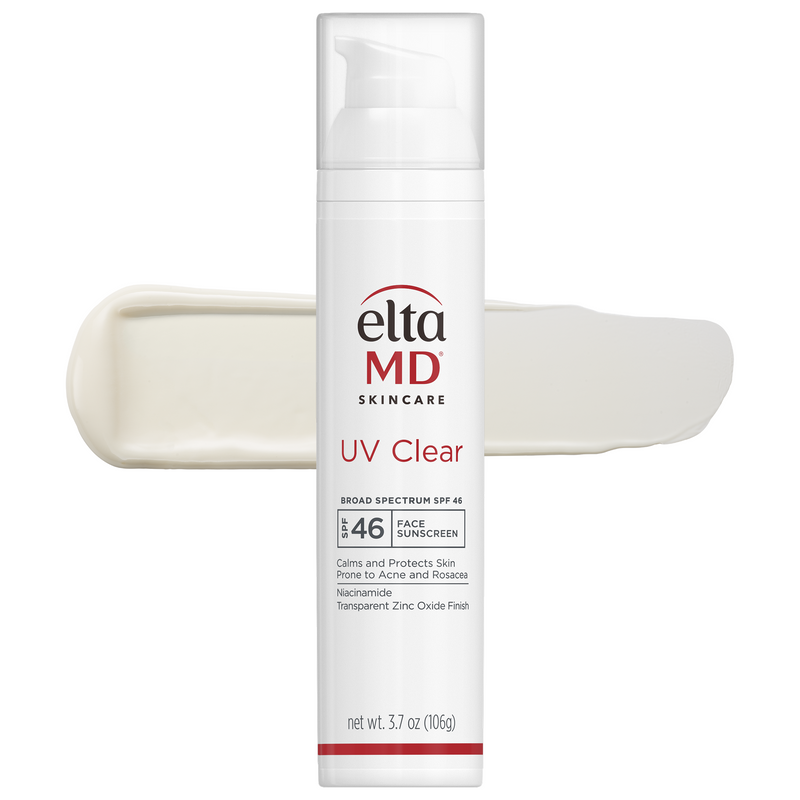
EltaMD UV Clear is the most targeted option here for acne-prone and redness-prone routines. The official page lists it for acne-prone, combination, and oily skin types, and describes the formula as fragrance-free, paraben-free, non-comedogenic, lightweight, and usable under makeup. It also states the formula contains 5% niacinamide and micronized zinc oxide, with active ingredients listed as octinoxate 7.5% and zinc oxide 9.0%.
That makes EltaMD UV Clear a hybrid sunscreen, not a mineral-only product. For many shoppers, that is not a problem; hybrid formulas can feel more elegant than high-zinc mineral creams. For shoppers trying to avoid chemical UV filters entirely, it is a meaningful trade-off. The more practical question is whether your skin tolerates the filter mix and whether you want a sunscreen that leans skincare-like rather than makeup-like.
Choose EltaMD first if your biggest concerns are clogged pores, a heavy finish, or finding a daily sunscreen that layers under moisturizer and makeup. Be more cautious if you are specifically searching for a 100% mineral formula or if octinoxate is on your avoid list.
La Roche-Posay Anthelios Mineral Tinted Sunscreen SPF 50
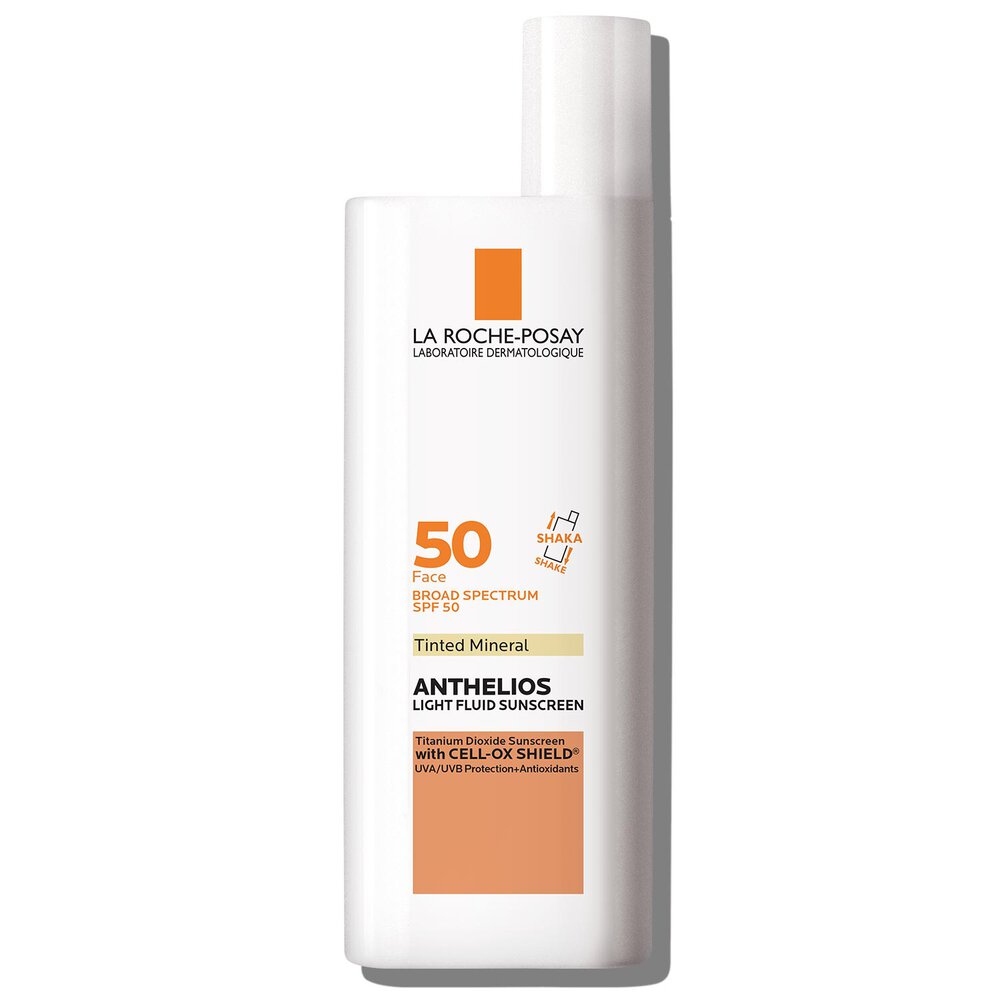
La Roche-Posay Anthelios Mineral Tinted Sunscreen is the most tint-forward option in this comparison. The official page lists the product at $39.99 when checked and describes it as a tinted mineral sunscreen for face. It is now shown with four flexible shades: Tinted, Medium, Medium Deep, and Deep. Ingredient details on the official page list the Tinted shade with titanium dioxide 11%, while Medium, Medium Deep, and Deep list titanium dioxide 17% plus zinc oxide 8%.
The practical advantage is cosmetic: tint can reduce the visible white cast that often makes mineral sunscreen hard to wear, especially for deeper skin tones. The trade-off is that tint introduces shade-match risk. A sunscreen can be technically elegant and still look too warm, too peachy, too light, or too deep on a specific person.
Choose La Roche-Posay first if you want a mineral-forward face sunscreen that behaves partly like a complexion product. It is the clearest pick here for someone who wants daily SPF plus tint in one step. If your skin is very reactive, check the ingredient list for the exact shade you plan to buy, because the active ingredient profile differs across shade options.
Prequel Sun Barrier Mineral Sunscreen SPF 50
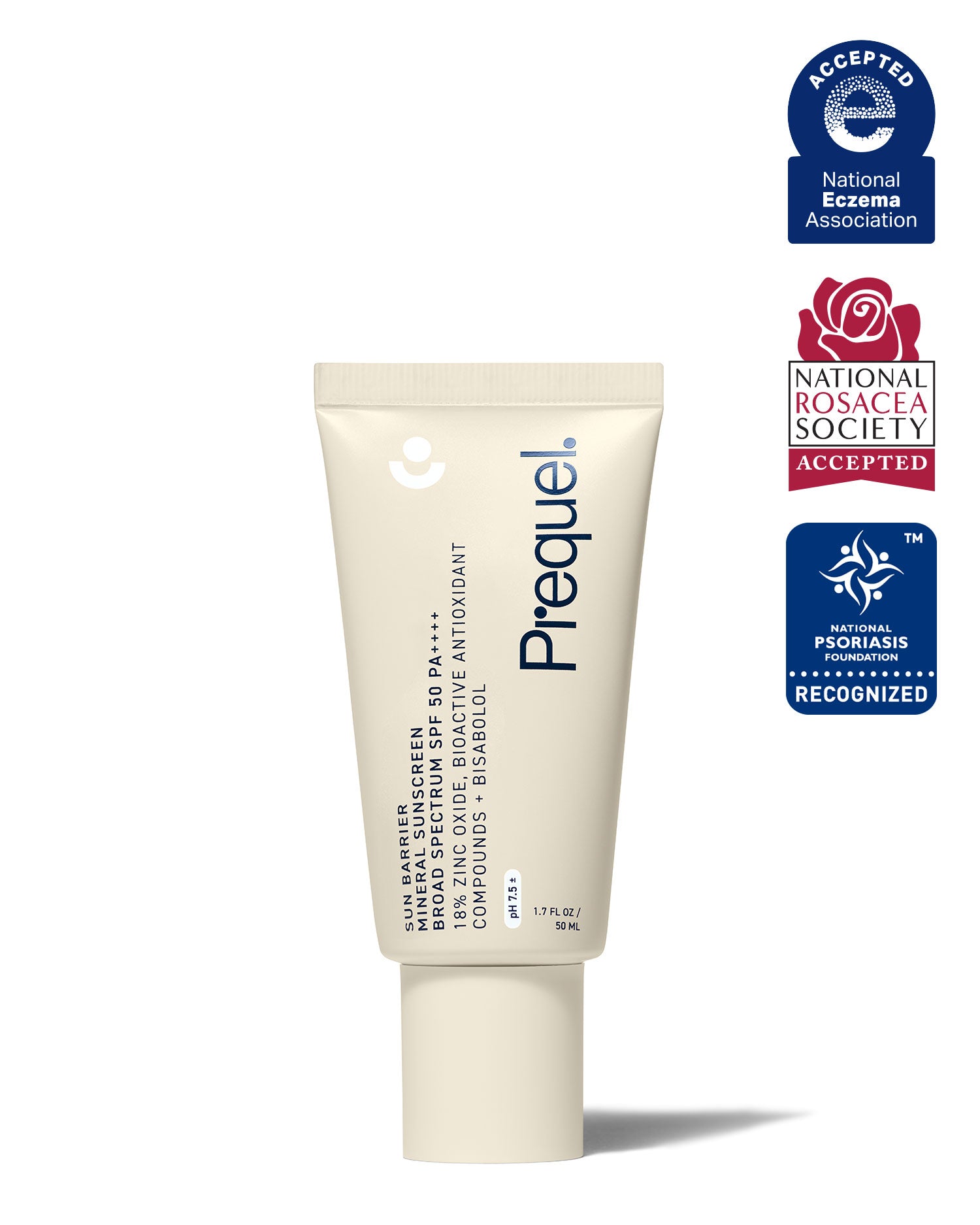
Prequel Sun Barrier is the barrier-care entry in this group. The official page describes it as a mineral sunscreen with chemical boosters, broad spectrum SPF 50 PA++++, water resistant for 40 minutes, and formulated with zinc oxide, bioactive antioxidant compounds, and bisabolol. It was listed at $22 for 1.7 fl oz when checked. The same page describes the finish as lightweight, semi-transparent, and peachy.
The sensitive-skin signal is also stronger than ordinary marketing copy because the National Eczema Association directory lists Prequel Sun Barrier and describes it as a lightweight, semi-transparent mineral sunscreen formulated with zinc oxide, bioactive antioxidant compounds, and bisabolol. The NEA page also warns that individuals with eczema or sensitive skin still need to identify ingredients that could trigger personal irritation. That caveat is important: seal listings and brand claims reduce uncertainty, but they do not guarantee zero reaction.
Choose Prequel first if your routine is already built around barrier support and you want a lower checked official price than the other two products in this comparison. Be cautious if you want a strict mineral-only interpretation, because the official product name and description include chemical boosters and the ingredient list includes butyloctyl salicylate.
Which One Should You Choose?
If your skin is acne-prone or oily, start with EltaMD UV Clear. The official positioning is clearly built around acne-prone, combination, oily, redness-prone use cases, and the lightweight, non-comedogenic angle is relevant for people who abandon sunscreen because it feels too greasy.
If your main issue is visible cast, start with La Roche-Posay Anthelios Mineral Tinted. The shade range gives it a more direct answer to the “mineral sunscreen looks chalky” problem. It is also the option to consider if you want sunscreen to slightly even tone without adding a separate complexion product.
If your skin barrier is the central concern, start with Prequel Sun Barrier. Its positioning, checked price, and NEA directory listing make it a strong candidate for people who want a daily SPF that sits inside a sensitive-skin routine rather than acting like a separate beach product.
No sunscreen comparison can replace patch testing. Apply a small amount near the jaw or behind the ear for several days before relying on a new formula daily, especially if you have a history of stinging, contact dermatitis, rosacea flares, or eye-area sensitivity.
Buying Notes and Link Discipline
Use official product pages or authorized retailers when possible, especially for sunscreen. Counterfeit or old stock is a real concern in skincare, and sunscreen performance depends on formula integrity, storage, and expiration.
For current details, check:
- EltaMD UV Clear Broad-Spectrum SPF 46 official page
- La Roche-Posay Anthelios Mineral Tinted Sunscreen official page
- Prequel Sun Barrier Mineral Sunscreen official page
If you are building a full sensitive-skin morning routine, pair this comparison with our barrier repair moisturizer roundup and our barrier cream comparison. The moisturizer underneath can change how a sunscreen feels, pills, or settles.
FAQ
Is mineral sunscreen always better for sensitive skin?
Not always. Mineral filters such as zinc oxide and titanium dioxide are often recommended for sensitive skin, but the full formula matters. Texture agents, preservatives, botanical extracts, fragrance, tint pigments, and boosters can also affect tolerance. A well-formulated hybrid sunscreen may be easier for some people to wear daily than a heavy mineral cream.
Which sunscreen in this comparison is mineral-only?
La Roche-Posay Anthelios Mineral Tinted is the closest mineral-focused pick, but the active filters vary by shade on the official page. EltaMD UV Clear is a hybrid formula with zinc oxide and octinoxate. Prequel describes Sun Barrier as mineral sunscreen plus chemical boosters, with zinc oxide listed as the active ingredient.
Which one is better for acne-prone skin?
EltaMD UV Clear is the most directly positioned for acne-prone skin. Its official page lists acne-prone, combination, and oily skin types and describes the product as non-comedogenic and lightweight. That does not guarantee it will work for every acne-prone person, but it is the clearest acne-prone fit among these three.
Which one is better if I hate white cast?
La Roche-Posay Anthelios Mineral Tinted is the more obvious starting point if white cast is your main frustration because tint is central to the product. Prequel also describes a semi-transparent peachy finish. EltaMD UV Clear is available in untinted and tinted formats, but this comparison focuses on the UV Clear SPF 46 product page rather than a full shade-range review.
Do I still need sunscreen if I use barrier repair cream?
Yes. Barrier repair cream can help comfort and moisture retention, but it does not replace broad-spectrum UV protection. The American Academy of Dermatology recommends choosing sunscreen with broad spectrum coverage and SPF 30 or higher. In a sensitive-skin routine, moisturizer usually comes before sunscreen in the morning.
Title Candidates
- Sensitive Skin Sunscreen Comparison: EltaMD vs La Roche-Posay vs Prequel
- EltaMD UV Clear vs La Roche-Posay vs Prequel: Which Daily SPF Fits Sensitive Skin?
- 3 Sensitive Skin Sunscreens Compared for Barrier Care, Tint, and Acne-Prone Routines
- Mineral and Hybrid Sunscreen for Sensitive Skin: EltaMD, La Roche-Posay, and Prequel Compared
- Daily Face SPF for Sensitive Skin: A Practical Comparison of EltaMD, La Roche-Posay, and Prequel
Sources
- EltaMD: UV Clear Broad-Spectrum SPF 46
- La Roche-Posay: Anthelios Mineral Tinted Sunscreen for Face SPF 50
- Prequel: Sun Barrier Mineral Sunscreen SPF 50
- National Eczema Association: Sun Barrier Mineral Sunscreen Broad Spectrum SPF 50 PA++++
- American Academy of Dermatology: How to select a sunscreen