
Azelaic Acid Serum Comparison for Sensitive Skin: The Ordinary vs Paula's Choice vs Naturium
Azelaic acid looks like the calm alternative to harsher actives until sensitive skin actually has to tolerate it. A formula can be marketed for redness, texture, or uneven tone and still feel too tingly if the base, supporting acids, or routine timing are wrong. That is why an azelaic acid serum comparison for sensitive skin should not start with a universal winner. It should start with the formula vehicle.
The practical split is this: The Ordinary is the simple suspension, Paula's Choice is the actives-heavy booster, and Naturium is the hydrating derivative serum. None of the three should be treated as a medical rosacea or acne prescription, but each can make sense for a different buyer.
Disclosure: Adpard may earn a commission if you choose to buy through product links, at no extra cost to you. Our editorial process is explained on our about page and editorial policy. We did not conduct first-hand clinical testing for this article; this comparison is based on official product pages, ingredient lists, dermatologist-facing references, and source-backed editorial review.
Quick Comparison: Azelaic Acid Serum Comparison for Sensitive Skin
| Product | Strongest fit | Formula direction | Price checked May 26, 2026 | Sensitive-skin watch-out |
|---|---|---|---|---|
| The Ordinary Azelaic Acid Suspension 10% | Uneven tone, visible texture, and a lower-frills routine | 10% azelaic acid in a cream-like suspension with silicones | Official US page showed $28.80 for the selected 100 ml variant; 30 ml also listed | May pill or feel primer-like for some routines; The Ordinary advises patch testing |
| Paula's Choice 10% Azelaic Acid Booster | Redness look, blemish marks, uneven tone, and congestion-prone skin | 10% azelaic acid plus 0.5% salicylic acid, licorice, adenosine, and soothing agents | Official EU page showed EUR 49.00 / EUR 39.20 promo; regional pricing may vary | Contains BHA, so very reactive skin should be careful with other exfoliants |
| Naturium Azelaic Acid Derivative Complex 10% | A softer serum step with niacinamide and vitamin C support | Glycinated azelaic acid complex 10% with niacinamide, ethyl ascorbic acid, and coffee seed extract | Official US page showed $20 for 30 ml standard size | It is an azelaic acid derivative complex, not the same structure as a straight 10% azelaic acid suspension |
Azelaic acid itself has stronger medical evidence in prescription formats than in cosmetic 10% products. DermNet describes azelaic acid as a dicarboxylic acid with anti-inflammatory and antioxidant properties used for acne vulgaris and papulopustular rosacea, while DailyMed's 15% azelaic acid gel label warns that burning, stinging, itching, dryness, and irritation can occur. That is the reason this comparison treats tolerance as a buying criterion, not a footnote.
The Ordinary Azelaic Acid Suspension 10%: Simple, Affordable, and Texture-Specific
The Ordinary Azelaic Acid Suspension 10% is the most straightforward formula in this comparison. The official product page positions it for textural irregularities, dullness, the look of redness, and uneven skin tone. It lists azelaic acid as the key ingredient, a suspension format, pH 4.00-5.00, and a formula that is alcohol-free, oil-free, vegan, gluten-free, and cruelty-free.
The formula base matters. The ingredient list includes dimethicone and dimethicone/bis-isobutyl PPG-20 crosspolymer, which helps explain why many shoppers describe this type of product as cream-like or primer-like rather than watery-serum-like. That can be useful if your skin likes a smoothing finish, but it can be frustrating if your sunscreen or moisturizer pills over silicone-rich products.
Choose The Ordinary if you want the most minimal comparison point: a 10% azelaic acid suspension without a long list of extra actives. It fits a routine where cleanser, moisturizer, and sunscreen are already stable, and you want to add one treatment step for tone or texture.
Skip it if you need a featherlight serum, dislike silicone slip, or already struggle with product layering. The Ordinary also advises avoiding some strong actives in the same routine and recommends patch testing, which is especially relevant for sensitive skin.
Paula's Choice 10% Azelaic Acid Booster: More Actives, More Moving Parts
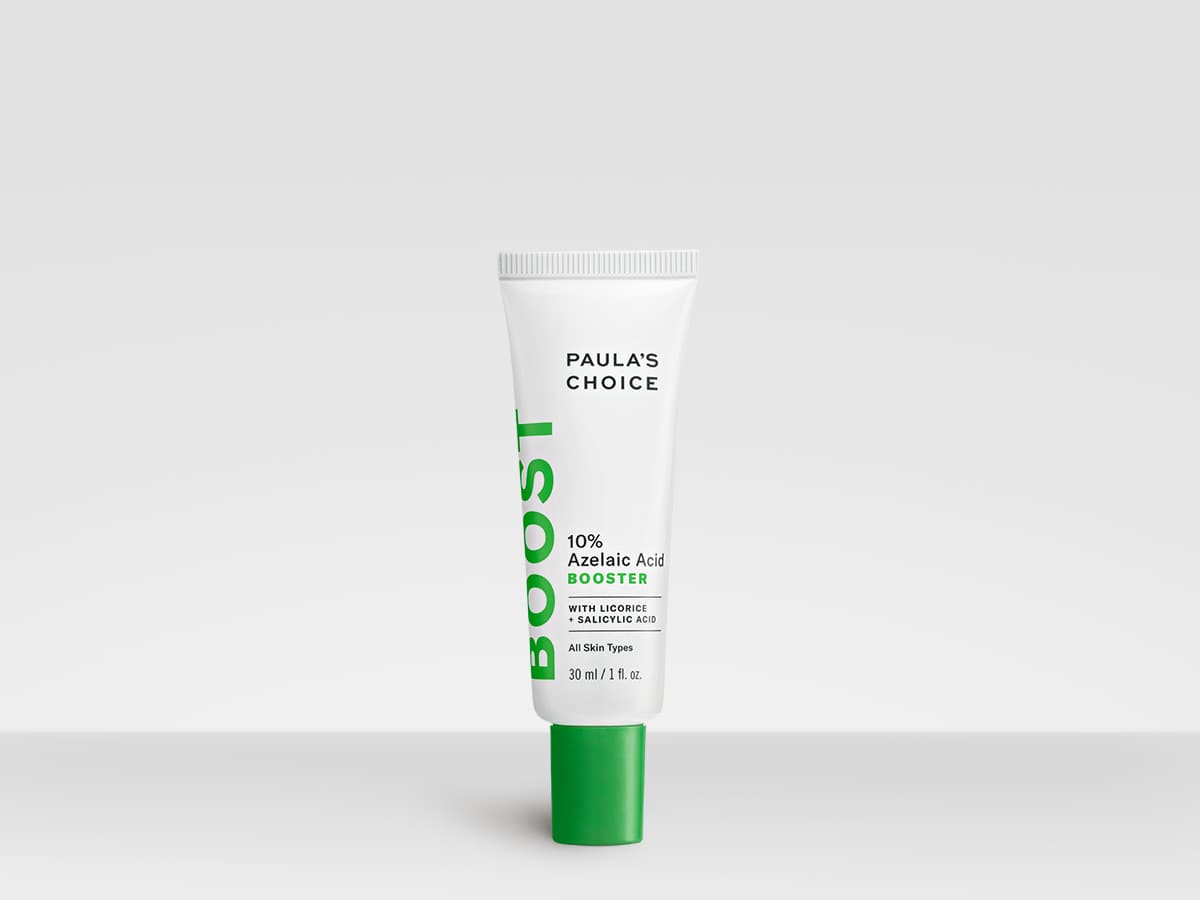
Paula's Choice 10% Azelaic Acid Booster is the most treatment-dense formula here. The official page lists azelaic acid, salicylic acid (BHA) 0.5%, and adenosine as key ingredients, with licorice root extract, allantoin, bisabolol, glycerin, and other supporting ingredients in the full list. It is positioned for breakouts, brown spots, rosacea-prone skin, dull skin, and uneven tone.
That makes it useful for readers who want one step that addresses several blemish-adjacent concerns. The BHA inclusion is the big difference. Salicylic acid can help with congestion-prone skin, but it also makes this formula less neutral than The Ordinary or Naturium. If your skin already uses an exfoliating toner, retinoid, benzoyl peroxide, or prescription topical, this booster deserves more caution.
The texture direction is also different. Paula's Choice describes it as lightweight and oil-free, usable alone or mixed with a moisturizer or serum. The official page says to apply once or twice daily and follow with SPF 30 or higher during daytime.
Choose Paula's Choice if your concerns are not just redness look or tone, but also clogged pores, blemish marks, and uneven texture. Skip it if your sensitive skin does poorly with salicylic acid or if your routine already contains several actives.
Naturium Azelaic Acid Derivative Complex 10%: Hydrating Serum with Niacinamide Support
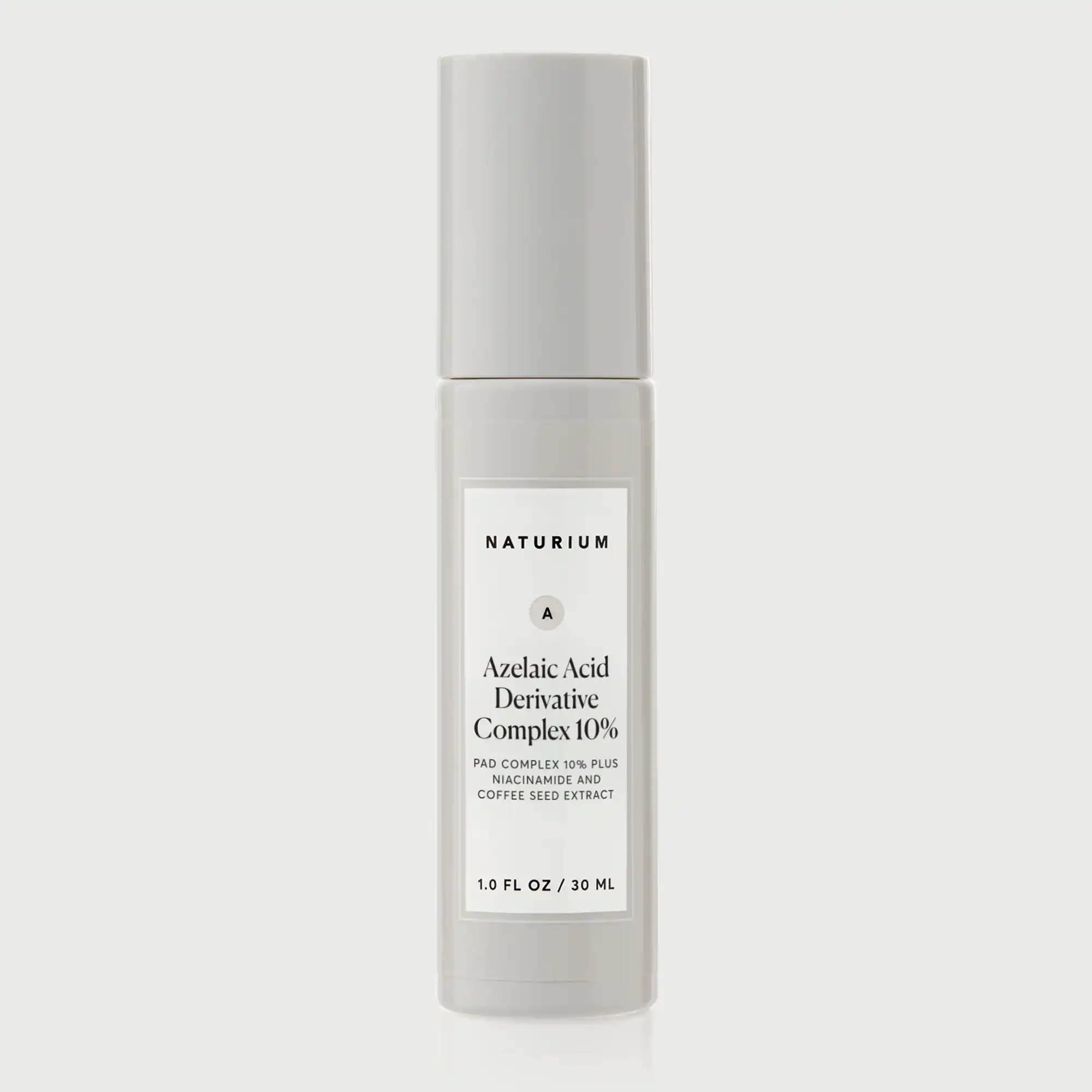
Naturium Azelaic Acid Derivative Complex 10% is the most serum-like option in this set. The official page says the formula uses a high concentration of a glycinated azelaic acid complex, along with niacinamide, ethyl ascorbic acid, coffee seed extract, sodium hyaluronate, and glycerin. Naturium positions it for the look of redness, uneven tone, texture, and excess oil balance.
The word "derivative" matters. This is not framed exactly like The Ordinary's azelaic acid suspension or Paula's Choice's 10% azelaic acid booster. Naturium uses potassium azeloyl diglycinate, a glycinated azelaic acid derivative. That can be appealing if you want a gentler-feeling serum format, but shoppers comparing strict percentages should understand that the formula approach is different.
Naturium also adds niacinamide and a vitamin C derivative, which makes it more of a combined tone-support step. That can be efficient if your routine is minimal. It can be less ideal if your skin reacts unpredictably to niacinamide or prefers single-ingredient changes.
Choose Naturium if you want an azelaic acid-adjacent serum that feels more hydrating and layered into a modern routine. Skip it if you specifically want a straight azelaic acid formula or if you want to isolate one active at a time.
Which Formula Fits Your Routine?
If your sensitive skin is new to actives, start with the simplest decision: do you want a straight 10% azelaic acid product, an active blend, or a derivative serum?
Choose The Ordinary when your routine is already calm and you want a lower-frills 10% azelaic acid suspension. It is the cleanest comparison point, but the silicone-rich texture can be polarizing.
Choose Paula's Choice when your skin concern includes blemish marks, uneven tone, and congestion. It is the most complete treatment-style formula here, but the BHA makes it less conservative for very reactive skin.
Choose Naturium when you want hydration, niacinamide, and tone support in one serum step. It is the softest routine concept, but it is not the same as comparing three identical 10% azelaic acid products.
For a sensitive-skin routine, the safest structure is usually cleanser, moisturizer, sunscreen, then one treatment variable at a time. If you are still building the basics, read our gentle cleanser comparison for sensitive skin, daily moisturizer comparison for sensitive skin, sensitive skin sunscreen comparison, and barrier repair cream comparison before adding another active.
How to Add Azelaic Acid Without Overloading Sensitive Skin
Do not introduce azelaic acid on the same week you start retinoids, exfoliating acids, benzoyl peroxide, or a new vitamin C product. If irritation appears, you will not know which product caused it.
Start two or three nights per week after cleansing and before moisturizer, unless the product directions say otherwise. Use a small amount, avoid the eye area, and apply to dry skin. If your skin tends to sting, try buffering with a bland moisturizer first, then apply the treatment after your skin is fully dry.
During the day, use sunscreen. The Ordinary, Paula's Choice, and Naturium all give daytime SPF guidance in some form, and sensitive-skin routines already need sun protection when targeting uneven tone or post-acne marks.
Stop and reassess if burning, itching, peeling, or redness persists. DailyMed's prescription azelaic acid gel label specifically notes that skin irritation such as burning or stinging can occur, and DermNet notes that very sensitive or eczema-prone skin may find azelaic acid irritating. A cosmetic serum is not worth pushing through persistent irritation.
Common Mistakes When Comparing Azelaic Acid Products
The first mistake is comparing only the percentage. A 10% label does not tell you how the product will feel. The base, supporting actives, pH, humectants, and layering behavior all matter.
The second mistake is treating "sensitive skin" as one skin type. Redness-prone oily skin, eczema-prone dry skin, retinoid-stressed skin, and post-acne mark concerns can require different formula choices. Paula's Choice may make sense for one reader because of BHA, while that same ingredient may be the reason another reader should avoid it.
The third mistake is expecting fast dark-spot results. Azelaic acid can support uneven tone routines, but visible changes take consistency, sunscreen, and time. If a product page mentions clinical timing, read the details and remember that your skin, routine, and sun exposure change the result.
FAQ
Is azelaic acid good for sensitive skin?
It can be, but it is not automatically gentle for every sensitive-skin routine. DermNet notes that azelaic acid is generally well tolerated by many people, but very sensitive or eczema-prone skin may find it irritating. Patch test and start slowly.
Which is better for beginners: The Ordinary or Paula's Choice?
For a cautious beginner, The Ordinary is the simpler comparison point because it does not add BHA. Paula's Choice may be more useful if you also want congestion support, but that extra active makes routine conflicts more likely.
Is Naturium's azelaic acid the same as The Ordinary's?
No. Naturium uses a glycinated azelaic acid derivative complex, while The Ordinary uses azelaic acid in a suspension format. They sit in the same shopping category, but they are not identical formulas.
Can I use azelaic acid with retinol?
Some routines combine them, but sensitive skin should not start both at once. If you use prescription tretinoin, adapalene, or a strong retinoid, ask a clinician or introduce changes slowly with a moisturizer buffer.
Can azelaic acid replace a dermatologist prescription for rosacea or acne?
No. The American Academy of Dermatology lists azelaic acid foam or gel as an FDA-approved treatment option for rosacea acne-like breakouts, but cosmetic 10% products are not substitutes for diagnosis or prescription treatment.
Final Verdict
For sensitive skin, the right azelaic acid product is the one that matches your tolerance profile, not the one with the loudest promise. Choose The Ordinary if you want a simpler 10% suspension, Paula's Choice if you want a stronger multi-active booster, and Naturium if you want a hydrating derivative serum with niacinamide support.
If your barrier is already irritated, pause the active hunt and stabilize the basics first. Our barrier repair moisturizers guide is the better next step when dryness, burning, or peeling is the main problem.
Sources
- The Ordinary, Azelaic Acid Suspension 10% official product page
- Paula's Choice, 10% Azelaic Acid Booster official product page
- Naturium, Azelaic Acid Derivative Complex 10% official product page
- DermNet, Azelaic acid
- American Academy of Dermatology, Rosacea diagnosis and treatment
- DailyMed, Azelaic Acid Gel 15% label